Programme in Architecture
8-12 June 2026
School of Architecture at Lund University invites you to the presentation days for the degree projects of the A-programme (AAHM01) from 8-12 June 2026.
The presentations are public and take place in the Full Scale Lab, A-building, Klas Anshelms väg 16, 223 62 Lund.

Max Carlsson / Mer än en arena: Norra Hovstallängen Uppsala
This thesis develops a proposal for a new arena at Norra Hovstallängen in Uppsala and investigates how a large-scale event and sports building can be integrated into one of the city’s most central and strategically located sites, close to Uppsala Central Station.
This thesis develops a proposal for a new arena at Norra Hovstallängen in Uppsala and investigates how a large-scale event and sports building can be integrated into one of the city’s most central and strategically located sites, close to Uppsala Central Station.
As Uppsala continues to grow and densify, the demands on central sites such as Norra Hovstallängen increase. This places greater emphasis on how large buildings operate over time and how they contribute to the surrounding environment beyond isolated events. Monofunctional structures that remain inactive for long periods risk underutilizing highly valuable urban locations.
Within this context, the project explores how an arena at Norra Hovstallängen can be structured to support a broader range of uses. Through strategies of flexibility, multifunctionality, and spatial adaptability, the proposal investigates how the building can accommodate both large-scale events and smaller, recurring activities related to sport, education, and everyday use.
The thesis argues that a future arena at Norra Hovstallängen should be understood as more than a destination for temporary events, but as a highly adaptable building that can operate continuously within a central and highly significant urban location.
The presentation will be held in Swedish.

Linus Josefsson / Backa Backa Kåken
Can an architect help a grassroots organization buy a prison?
Kirsebergsanstalten is a cell prison complex from 1914 in the district Kirseberg in Malmö, which has been empty since its formal closure in 2017. It’s a place of large social-historical importance, being the only old cell prison still preserved in the city. The prison now faces an uncertain future after a time of ownership by the public housing company MKB who recently decided to not develop the site.
One interested party in the prison is Backa Kåken, a grass roots organization/not-for-profit formed in 2023 with the goal of buying both the prison and the land it is on to create a social, creative and cultural hub. The aim is to create a part of the city outside of the speculative market, which can be developed directly by the locals and is not dependent on the political seesaw or other organizations that primarily serve their own, separate interests. Backa Kåken is a flatly organized collective – and the prison will be developed and run just so in the event of an acquisition.
This thesis is about how I’ve worked with Backa Kåken to create a plan for how the prison can be filled with their active member businesses and how the whole complex can be used to realize the vision of an independent, citizen-owned part of the city. In parallel, I discuss the architect’s role in the context of a flat organization. What skills do we have and how can we use them to contribute in a collectively driven process to actualize a collective spot where the users feel agency and common ownership?
The presentation will be held in Swedish.

Elin Neij / Det sitter i detaljerna: hantverkets relevans i den arkitektoniska upplevelsen
What happens when we allow care for details, materiality and craftsmanship to become priorities in architecture?
Today we are part of an era shaped by industrialisation, digitalisation and standardisation. Much of contemporary architectural production has become homogeneous and prefabricated. The need for conscious decision making and care for the built environment is not in conflict with practical demands; rather it is increasingly being deprioritised as a consequence of economic priorities.
It is not a question of aesthetics, but one of compassion and consideration for what we build.
This thesis is an artistic investigation into craftsmanship, materiality, and the presence of care in architecture today. It serves as a critique of the industrialisation of architecture and the mass production of prefabricated elements through craft prototypes, model making, interviews and research.
The presentation will be held in Swedish.

Johanna Pettersson / Stilla rum
A project about making room for stillness, presence, and spirituality.
In a society defined by constant stimuli and the demand for achievement, where do we go when we just need to catch our breath? This project explores how architecture can address the need for both mental recovery and religious practice in our everyday lives by designing a “room of silence” on the LTH campus.
There are certain spaces that instantly invite us to slow down and soften our voices, places where presence, stillness, and contemplation naturally can take place. These can be sacred, religious rooms or other peaceful places where one can feel comfortable just sitting in silence to ponder both the big and small questions of life. This atmosphere isn’t random, it is the result of specific architectural qualities combining to create a distinct mood.
In today's society, very little space is dedicated to our inner life, where we are allowed to simply be, think, meditate, contemplate, or pray. We lack spaces that are independent of any specific religion, and where there is no requirement to pay or perform. A room where you never have to ask: How long am I allowed to stay?
This project began with these thoughts: how architecture can create space for stillness, presence, and spirituality within a secular and multireligious society. It then turned toward the immediate surroundings, exploring what a room dedicated to this could look like right here on the university campus.
The presentation will be held in Swedish.

Ellen Verlage / Huvudkontoret: vår tids palats?
This project investigates how the understanding of corporate headquarters as an architectural type can inform its transformation into a new urban function. The project is developed as a case study of Ericsson’s former headquarters in Kista, a large office complex currently vacant during a period of high office vacancy rates in an area undergoing urban restructuring.
As this part of Kista transitions from a monofunctional office district into a mixed-use city area with new housing developments, the project identifies a growing need to create space for public life and culture for new residents, while valuing and making use of the city’s existing built structures.
The proposal responds to this situation through the transformation of the former headquarters into a public art hall and museum with an accessible public ground floor. Through an analysis of the building’s organisational principles, rhythms, and flows, the theme of the palace is identified, revealing parallels in its role as a building of representation and the display of influence. This reading of the building’s inherent qualities forms the basis for the design decisions, with focus on enhancing the palace theme in order to explore how this characteristic of the headquarters can inform new interesting spaces for exhibitions and public use.
The presentation will be held in Swedish.

Enoo Rasmussen / Rörelse i bostaden
We spend many hours of our lives in our homes, so it is important that they are well designed. Architects cannot create a home, but they can create spaces. The spaces shape the conditions of the home, its canvas, and it is up to the residents to paint their own home in the space.
There are many qualities that can be important in creating a good home and there is one characteristic that I think ties many of them together. This characteristic is movement, specifically movement of people. This has made me curious to explore movement further and it has therefore become the basis for this work.
I have explored the concept of movement with three different methods. Through these methods, I have developed eight aspects of movement: Configuration, Integration, Visibility, Axiality, Circulation, Rhythm, Light and Openings. The first method consists of theory. In the second method, six existing dwellings have been analyzed based on the eight aspects. The third method consists of a practical exploration where I have designed three dwellings with the concept of movement in focus.
The work addresses the following question: What can the concept of movement mean in the design of a home?
The presentation will be held in Swedish.
Ville Kronlid Levin / Maracana
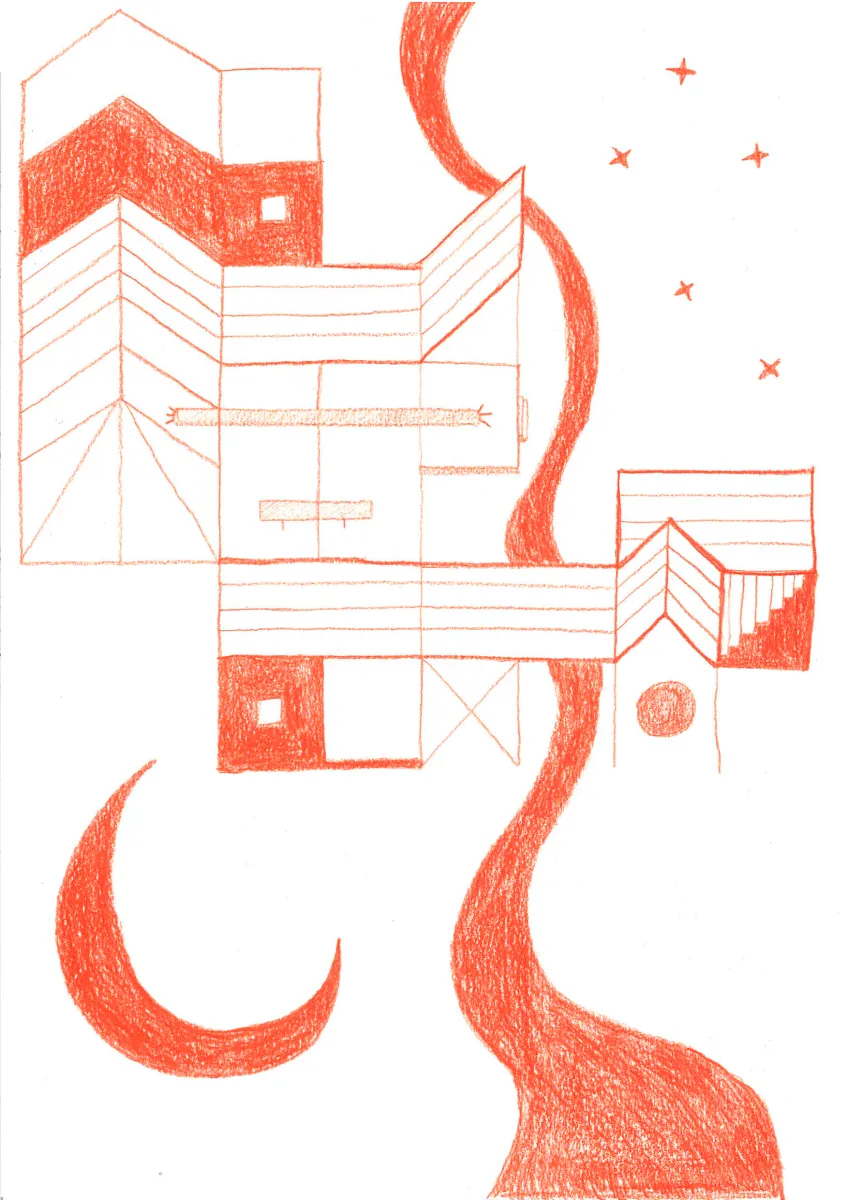
This thesis investigates public space in informal Tanzanian settlements and how these urban environments grow through incremental change rather than centralized planning. The origins of the project is the rapid urbanization currently taking place across Africa and focuses on how collective and public spaces emerge in areas where the state does not intervene in order to protect common urban space.
The project begins with a study consisting of a visit of six weeks where we visited Dar es Salaam and Mwanza, using mapping, interviews, sections and observations to understand the relation between streets, buildings and temporary activities.
My project focuses on the football hall Maracana, named after the Brazilian stadium. It is a building that has gradually expanded through a series of additions: toilets, shop extensions and a newly cast foundation where it will expand even more. The hall is not understood as a finished object but as part of an ongoing process in which each addition changes the building’s relationship to the street and the surrounding public life.
The design proposal explores how the building’s existing logic can extend into the street through temporary appropriations, modular structures and recurring objects. The project has been developed through a series of analytical and spatial drawings inspired by the work of John Hejduk and Balkrishna Doshi, where relationships between objects, symbols and spatial motifs are explored through axonometric projections. Through these drawings, the thesis attempts to abstract the site and understand how elements and artefacts together can produce a whole coherent space. The final axonometric drawings function as syntheses in which the building’s slow development, the street’s temporary appropriations and everyday public life merge into possible future scenarios. The aim is not to produce a solid, closed form, but to visualize a possible condition within an ongoing urban transformation.
The presentation will be held in Swedish.

Axel Leksell / Architecture for sustainable digital habits
This thesis investigates how the built environment can support a more sustainable relationship to the digital sphere. In a society increasingly shaped by screens, the project asks how architecture can create spaces that encourage reflection, physical social interactions and creative activities. It also explores how a programme can support this ambition by activating more senses than the visual.
The project is located in Mariefred, on the site of the former Gripsholms Kungsladguård. Historically connected to Gripsholm Castle and the surrounding agricultural landscape, the site once functioned as an important place of production. After a fire in 2014, the area has remained largely abandoned, with only fragments of its former structures still present. The project asks how the site can be reactivated by rediscovering its role as a productive environment and strengthening the pedagogical connection to its agrarian history. The proposal takes the form of a public cultural complex, bringing together spaces for making, learning, gathering and contemplation.
The ambition is to create a place where these activities become meaningful alternatives to passive digital consumption, while reconnecting the site to its cultural history.
The presentation will be held in Swedish.

Joel Rosqvist Raicevic / Vad menar du med att slänga?
A transformation of Magasin 405 in the port of Helsingborg into a circular re-use center with public facilities and apartments.
Due to the urban expansion of Helsingborg, the port has gradually been relocated further south, leaving behind a collection of former magazine buildings. Magasin 405 once served as a storage facility for goods unloaded from ships passing through the strait. Shaped by its industrial past, the building possesses significant architectural qualities with a robust concrete structure designed to withstand immense loads within a flexible column system.
Acts of recycling and reuse are often relegated to the urban periphery, placed in sparse industrial zones detached from everyday public life. This thesis repositions reuse as a generator for interaction, education, and civic engagement, while questioning the notion of storage as a passive act. By taking advantage of the existing structure’s spatial and structural capacities, the project proposes a new reuse centre where inhabitants can access and reclaim materials from the city, extending their life cycle through continued use.
Magasin 405 was the only remaining building from the former port not demolished during the development of Oceanhamnen, a new mixed-use waterfront district containing housing, offices, and restaurants. Despite its central location, the area lacks a distinct identity and sufficient green public spaces for its residents. In response, this project proposes an alternative approach to urban development, one that embraces existing architecture as a resource for densification, preservation, and the creation of a more characterful urban environment.
The presentation will be held in Swedish.

Jakob Hagrydh / Informality as Temporality. The Street as Public Medium
This thesis explores how public life is spatially produced and sustained within the informal streets of Mwanza, Tanzania, and how architecture can engage with a temporal urban logic. The project approaches the street as the primary social and spatial system available to city dwellers: a place continuously negotiated through commerce, transit, waiting, gathering, storage, cooking, and everyday occupation. In an otherwise dense urban environment, the street functions as a shared public medium.
The thesis ultimately asks how unplanned streets within informal environments can be regularised while enhancing their public values.
Through case studies and site-based fieldwork conducted within a selected area, the project investigates how structures and activities related to vending shape the use and meaning of the street. By examining the relationship between temporary and permanent spatial conditions, the thesis develops an understanding of use versus program, and how these interact within informal urban environments.
Drawing from architectural research through observations, interviews, photography, and spatial analysis, the project investigates how temporal spatial systems create urban coherence despite the absence of centralized planning, ordinance, and control, while responding directly to the needs of the majority urban population in Tanzania.
Rather than working at the scale of the masterplan, the design explores how architecture can relate to temporality and adaptability in enabling social occupation, flexibility, and shared urban life.
The presentation will be held in Swedish.
Maria Xie / Between Permanence and Temporality: Activating public space through temporary events
This master’s thesis investigates how temporary urban events can contribute to long-term active, sustainable, and inclusive urban environments. Using Lundakarnevalen as a case study, the project explores how temporary spatial conditions can inform more permanent architectural interventions in historically sensitive contexts.
The project focuses on Lundagård in Lund, Sweden, a historically significant public space located between the cathedral, university buildings and the city center. While Lundagård is generally experienced as a calm park environment in everyday life, it is radically transformed during Lundakarnevalen into an intense and highly active public space filled with temporary structures, social interaction, and changing movement patterns.
Through site analysis, mapping of flows and spatial organization and studies of the carnival’s temporary structures, the thesis examines how relationships between public space, architecture and movement change during large-scale events compared to everyday conditions.
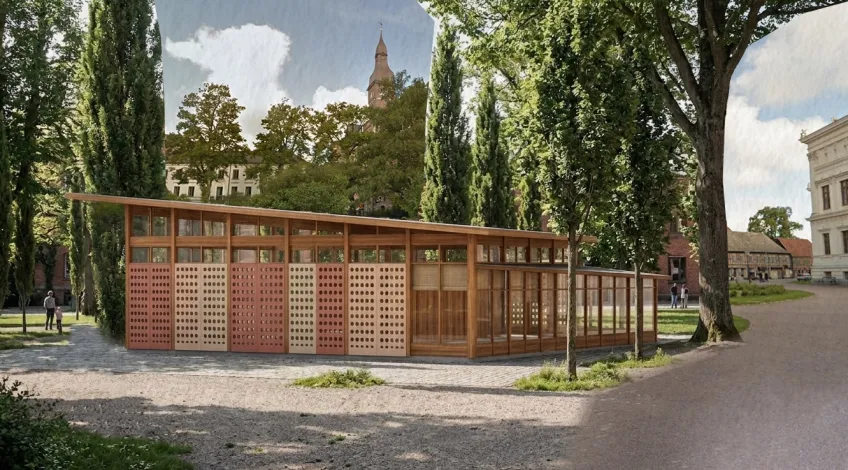
The design proposal consists of a flexible multifunctional pavilion in Lundagård. During the carnival, the pavilion functions as an information center and activity hub, while during the rest of the year it can accommodate student activities, a café, or other public functions. The project particularly explores flexibility and the coexistence of temporary and permanent uses over time.
The thesis is further informed by practical experience from the planning of Lundakarnevalen 2026, including work with the festival’s overall site map, spatial flows, safety planning, and program organization.
Presentation will be in Swedish.

Jennie Kohkoinen / Naturnära bad i centrala Luleå
In this master thesis, I am designing a public bath by the water in central Luleå. The bath aims to be a place for recreation and social interactions. It is a place to escape the busy everyday life and get close to nature all year round. Great seasonal changes in weather, temperature and light have influenced the project. The aim was to create a building that is suited for the dark winter days by the ice-covered river as much as the warm summer days with endless light. The thesis explores how light can influence the bath to create different contrasting atmospheres. The program includes different types of saunas and baths of varying temperatures and a restaurant.

Douglas Barclay / Lärdomar av fyren
The project, Lärdomar av Fyren, is an architectural exploration of the lighthouse as a phenomenon, symbol, and sublime object. The aim is to reinterpret the historical and spatial significance of the lighthouse through a contemporary building in the form of a marine biology center. The center is located on the island of Lyr, within the Bohuslän archipelago, a site chosen for its strategic sightlines toward the Pater Noster and Måseskär lighthouses.
During its peak, the lighthouse was a catalyst for technical innovation, particularly during the maritime trade boom of the 19th century. Today, society faces entirely different challenges, such as climate change and human impact on the local ecosystem. The center aims to address these issues through both field research and public exhibitions designed to spread awareness.
Theoretically, the project is grounded in Carl Jung's ideas about symbols. Based on Jung’s theory, the idea of the lighthouse as a "church of the sea" is developed. Furthermore, it incorporates Edmund Burke's concept of the sublime: the awe-inspiring terror evoked by the forces of nature. The goal is for the architecture to evoke this sense of the sublime in the visitor.
The marine center is built around a spatial sequence of seven typologies designed to mirror the lighthouse keeper's journey to the lighthouse. The experience begins with a walk from the small natural harbor, representing the journey across the sea. As visitors move forward, they experience the arrival at the site and follow a curated path through the building. Upon entering, they walk from dark, narrow spaces toward light-filled areas that reveal expansive views of the landscape.
Ultimately, the project strives to create a grand architectural experience that strengthens the local economy, promotes marine research, and acts as a contemporary symbol of sustainable innovation in the spirit of the lighthouse.
The presentation will be held in Swedish.

Lykke Elinder / Hus i Hus
The key to a great project is a great concept. The possibility of designing a project true to that concept depends on the resources available to the architect. All design processes have their limitations, and this thesis consists of a transformation project in which the only limitations to the concept are myself and an existing barn.
For nearly a year, I have been working professionally on the transformation of a barn outside Lund, attempting to distinguish between the existing historical layers, the layers of the addition, and the spaces created in between. Throughout the process, I have relied on resources such as the knowledge of colleagues and consultants, the history of the site, the clients’ references and programme, and repeated visits to the building itself. What I have come to realize, however, is that the most valuable resource in any design process is time, and time is often scarce in the architectural field. In transformation projects especially, limited time can constrain a concept more than the existing walls and roof structures of the building itself.
In this thesis, I am taking advantage of the time provided by the school of architecture to explore a personal philosophy of transformation, adaptability, and aesthetics through the design of an addition rooted in the concept of layering. The aim is to refine existing spaces and introduce simple structures that allow for iteration and change over time, while offering a range of spatial qualities and uses.
Just as personal values evolve, so do our needs and our built environment. We refurnish rooms, add and remove partitions, and attend social gatherings in former hay barns. This project represents principles developed in the threshold between architectural education and professional practice, as well as the architectural values I currently believe in.
The presentation will be held in Swedish.

Måns Kristoffersson / The living track
How can an abandoned railway track and station area change the identity of the city of Staffanstorp? Historically, the railway line was a vital catalyst for the town's industrial growth, driving the expansion mainly around the local sugar mill. However, following the end of passenger traffic and the sugar industry, this extensive linear space changed into a functional vacuum and a physical and mental barrier.
This project investigates how to reclaim the unregulated, transitional urban spaces without compromising their unique and inherent qualities. Today Staffanstorp functions largely as a commuter town, experiencing a rapid population growth of young families alongside a documented lack of "third places", with very few free, non-commercial public spaces for spontaneous social interaction. This lack often leads to a cultural leakage to nearby cities, such as Malmö and Lund.
The proposed design strategy addresses these challenges by transforming the abandoned railway corridor into a continuous green recreational and cultural artery, establishing it as the town's new civic backbone. By reinforcing existing informal pathways rather than forcing arbitrary new ones, the intervention maintains a delicate balance with the rich spontaneous biodiversity thriving along the embankment. The conceptual framework envisions a multi-layered hub at the old station area, where sports, culture, and community life can coexist in a dynamic way. Ultimately, this thesis demonstrates how a forgotten infrastructural leftover can be reimagined to bridge urban divides, retain local creative energy, and foster a more inclusive, vibrant, attractive and resilient identity for Staffanstorp.
The presentation will be held in Swedish.

Truls Olin / Bortglömd sten
The stone barn at Borgholms Kungsgård, most likely erected in the early nineteenth century, stands today as part of a farm environment with roots dating back to 1533. Once used for royal residence, grain storage and agriculture, the site now faces a challenge shared by countless rural structures across Öland: abandonment. This degree project proposes a transformation of the site through adaptive reuse, reactivating the derelict agricultural building while carrying its cultural heritage forward.
The project approaches the stone barn through a framework where architecture is understood in relation to craft and memory. Öland's landscape is inseparable from its limestone bedrock, and for centuries this geology has shaped not only the buildings but the knowledge embedded in those who built them. The art of dry-stone construction, the careful stacking of stones without mortar, is today listed on UNESCO's Representative List of Intangible Cultural Heritage. Yet the living knowledge of this craft is disappearing. It is this double threat, to both the physical building and the intangible heritage it embodies, that drives the project.
The proposal centers on two interventions. The existing stone barn is transformed into a centre for limestone craft, providing workshop spaces that enable the practice and transmission of traditional stonemasonry at various scales. Alongside this, a new residential building is introduced into dialogue with the historic volume, an addition that neither imitates nor ignores the existing, but seeks a contemporary architectural voice within an established environment.
The project argues for an understanding of cultural heritage as something living rather than static. Architecture here is not a frame around history, but a continuation of it, built from the same ground, the same material and the same craft that has always defined this place.
The presentation will be held in Swedish

Greta Söderström / Fasadens ornamentik: en undersökning i gränslandet mellan arkitektur och konst
The thesis explores how contemporary architectural façade ornamentation can be developed through inspiration from contemporary public art, with the aim of strengthening exterior public spaces. Through theoretical, empirical and design-based investigations, the project examines how artistic and architectural strategies can be integrated into façade ornamentation, thereby contributing to enhanced spatial quality and increased social interaction in the city.
In recent years, a major architectural debate on aesthetics has emerged in Sweden centered around façades and their impact on the public spaces in which they are situated. What provokes concern is not whether these buildings fulfill their function or are technically well executed, but rather the effect façades have on the cityscape, urban environment and its visitors.
One aspect often missing in criticized contemporary Swedish architecture is façade ornamentation. Ornaments were once an integral part of architecture-integrated art and contributed to the public artistic landscape and urban public space, but since modernism in the early twentieth century rejected decorative ornament as unnecessary and wasteful, these elements have largely disappeared from the architect’s repertoire.
By reintroducing the view on façade ornaments as a form of public art, it can be legitimized and its values more clearly understood. This perspective may also support architects in moving beyond historical ornamentation and instead working with more contemporary expressions.
The study finds that façade-integrated art holds significant architectural potential, and that its qualities can inspire architects in shaping façades that contribute to urban public spaces. Furthermore, it identifies an apparent lack of artistic work within architectural practice and suggests strategies for reintroducing it.
The presentation will be in Swedish.

Rebecka Östlund / Mellan hav och höjder. Arkitektur för turism i Arild
In response to the stress of contemporary urban life, there is a growing interest for hiking and nature-based tourism. This thesis explores how architecture in a nature-oriented environment can be designed to support such a lifestyle. The project investigates how architecture for tourism can be shaped as an extension of the identity and character of the fishing village of Arild.
Villages such as Arild are largely composed of privately owned summer houses, resulting in limited shared spaces and seasonal fluctuations in activity. Through a design proposal consisting of a shelter, a sauna, a hostel, two cabins, a community building, and a trail connecting the buildings to one another as well as to Skåneleden, the project examines how site-specific architecture can respond to the growing interest in nature tourism while also contributing to social sustainability in the village throughout the year.
The presentation will be held in Swedish.

Carl Jakobsson / Märkligheter
Everyone can see that a building is big or small, is made of brick or wood, is a school or a museum. But architecture is more than walls and rooms. Märkligheter are the strange and hidden things of architecture not immediately seen in the building. No one can tell a site was built purely for storing weapons and gunpowder two hundred years ago. It is not obvious that a building is there as a first of many that would ruin a city’s culture and identity. A building can’t tell you what the people around it think about it.
When I look at a building I do so with my own eyes and thoughts. As does everybody else. When I think a building is beautiful, someone might say it’s ugly. When an architect says a building is supposed to bring life to a neighbourhood, someone living there can tell you it doesn’t. If I for a moment stop looking at the building, and look around or through it, what can be learned from that? Can looking around, and writing down what is seen, thought and read be important for architects?
When traditional critique is mainly about the building as it stands, märkligheter is writing about values that come with the building, placed into our cities. How it affects ordinary people and their lives. As architecture is not a sculpture, but a massive blob around and through which life happens, I believe it should be written about as such. With three essays of prose, I want to look at these aspects, to rethink the language, the contents and the purpose of architecture criticism.
The presentation will be held in Swedish.

Filippa Norberg / The Soft Barrack
Barracks are an integral part of our urban landscape. Because of their supposed temporality, this mundane typology often evades architectural investigation. Although temporality is what grants their existence and justifies their simplicity, these structures tend to linger beyond their intended duration. As a consequence of the limited architectural agency associated with modules, barracks exist in a limbo. Never fully belonging and never entirely solidifying or dissolving. Rather than standardizing for control, could we instead standardize for variation to allow for contextual consideration? Anonymity and monotony do not have to be prerequisites for flexibility, transportability or low cost.
Temporary structures such as scaffolding and fumigation tents are often understood through their impermanence, adaptability, and strict functionality. By drawing on the qualities of these ephemeral structures, as well as implementing emerging perspectives on fabrication and standardization, this project reconsiders the barrack as an architecture capable of responding to context through architectural authorship.
Working through the lens of structure, construction, and tectonics, school barracks are reimagined as self-sustaining and context-adaptable ecosystems of interdependent parts. By standardizing relationships rather than individual parts, the inflatable can be carefully authored. This allows design agency and, by extension, a temporal architecture that responds to place while still incorporating key aspects of the barrack typology. It consists of smaller components that together form a whole, adopting a hands-on approach to construction and implementation at a scale suited to human hands.
Katedralskolan in Lund serves as the case study for the project. The institution carries with it a careful and historically informed approach to expansion. The site currently contains barracks that have served as the concrete object of this investigation.
The presentation will be in Swedish.
Sara Carlsson-Frost & Benjamin Savatovic
Space in between: På tvären - Architecture found in translation
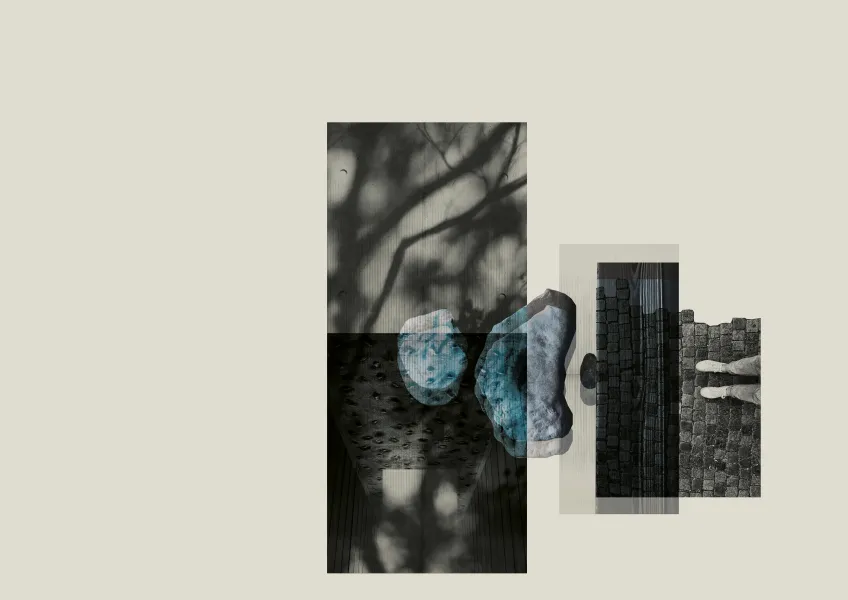
Space in between: på tvären investigates the potential of the in-between space as an architectural and urban design tool in the existing city. Through studies of Japanese architecture, culture and building tradition, the work examines how in-between spaces — physical as well as metaphysical — can contribute to densification, increased spatial quality and new relationships between the private and public.
The work takes its point of departure in a scholarship trip to Japan in the spring of 2026, where contemporary architectural projects, traditional building types and urban environments were documented and analyzed through a self-developed investigative format. Particular focus was directed towards the concept of ma (間), understood as an active and meaningful void between things, spaces and events. Through observations of sequences, transitions, light, transparency, movement and construction, a framework was developed for reading and working with in-between spaces at different scales.
These insights are subsequently translated into a Swedish and Lund-specific context through a design proposal in the Toppen block in central Lund. The site, characterized by historical divisions, demolitions and undefined urban voids, is studied as an in-between space between different urban spaces, movements and identities. The project proposes an architecture in which street, block, dwelling, work and greenery are allowed to overlap through sequences of spaces and graded transitions.
The work argues that the in-between space should not be understood as left over space or a void, but as an active layer within architecture with the potential to create proximity between opposites without dissolving their differences. By making the in-between space into a conscious working principle, we believe that the existing city can be developed with greater spatial complexity, social proximity and long-term sustainability.
The presentation will be held in Swedish.

Matilda Ingvast Wennerström / More than a school -Building social resilience through shared space in the lower Himalayas, India
Can a school be more than a school?
In the rural mountain regions of the lower Himalayas in Uttarakhand, India, schools have the potential to fill a function beyond their educational purpose. In a landscape shaped by steep terrain, dispersed small settlements, natural challenges and very limited public infrastructure, the schools hold the potential to bring more to the communities they serve. Becoming places for community life, gathering and skill-sharing. This thesis investigates how a school can function as social infrastructure while also addressing seismic resilience, sustainability, and the integration of local knowledge and traditions.
The project is based on fieldwork in the region, where participatory methods are used to engage with the communities as experts of their own realities. Through conversations with students, teachers, and residents, local challenges emerged, including environmental challenges and the ongoing outmigration of young people in search of education and economic opportunity. Today the villages rely mainly on self-sustaining agriculture, and few have a stable income. There is a strong desire for spaces that can support community gatherings, skill-learning and vocational training, supporting collective social resilience.
Alongside these social investigations, the thesis explores traditional construction knowledge, local materials, and climate-responsive strategies within the environmental context of high earthquake risk and monsoon periods with heavy rainfall mixed with seasonal water scarcity.
The project approaches architecture as a collaborative process rooted in lived experience and local knowledge. It proposes a school that extends beyond its institutional role, embedded within landscape and community, and capable of supporting learning, social exchange, and long-term resilience in rural mountain regions.
The presentation will be held in Swedish.
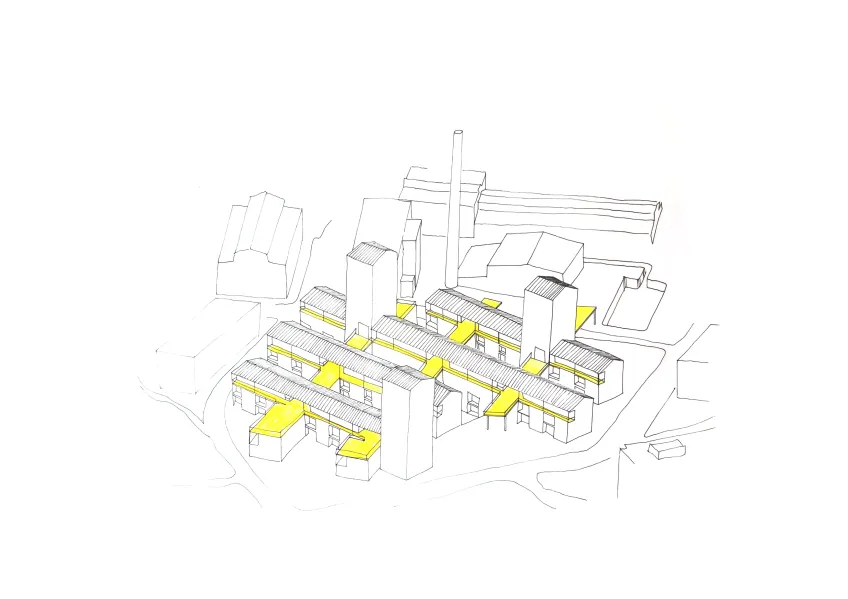
Julia Telin / Tre Torn
Housing today is often shaped by efficiency, repetition, and strict optimization. As a result, many contemporary residential environments lack spatial diversity and opportunities for informal social life. This thesis explores how housing architecture can create richer relationships between the private and the collective, the individual and the shared.
The project is situated in Lövholmen, Stockholm, an area shaped by industrial history and ongoing transformation. Through the proposal, I investigate how new housing can respond to the existing landscape and urban fabric while introducing more adaptable and generous living environments. Rather than viewing the dwelling as a fixed unit, the project explores housing as a framework that can support changing needs, different household structures, and everyday encounters over time.
By working with variations in scale, shared spaces, transitions, and spatial sequences, the thesis examines how architecture can create a stronger sense of belonging and community within dense urban environments. The work asks how future housing can move beyond standardization and instead support more flexible, social, and sustainable ways of living.
The presentation will be held in Swedish.

Erica Stensson / Möt mig i det blå. Meet me in the blue
Mitt projekt undersöker hur ett kargt skärgårdslandskap kan ge mig viktiga verktyg för gestaltandet av en irreligiös byggnad utformad för sinnesro, starka känslor och mellanmänskliga möten. Utgångspunkten är att vackra naturupplevelser kan väcka en sekulär känsla av andlighet, mening och närvaro. Inspiration hämtas delvis från sakrala rum, då dessa historiskt lyckats förmedla sådana känslor, men målet är att uppfylla det behov jag identifierat och att skapa fler neutrala och tillgängliga platser för livets viktiga ögonblick för alla.
Platsanalysen är djupt rotad i intuition och sensoriska upptäckter i naturen. Genom analogt fotografi fångar jag både horisontens storslagenhet och markens dolda detaljer – ljusfenomen, skuggor och texturer som det mänskliga ögat annars riskerar att förbise. Denna metod kombineras med skisser, berättande texter och colour-mapping för att ge mig viktiga insikter och verktyg till gestaltningen. Målet är ett arkitektoniskt samspel där plats och byggnader ömsesidigt tillgängliggör och förstärker varandras kvaliteter.
Min plats som jag väljer är Kolvik på ön Brännö i Göteborgs södra skärgård. Valet föll på Kolvik på grund av klippornas dramaturgi samt vikens placering vid slutet av en grusväg, nåbar via en kort promenad från öns båda båtbryggor men också hur de befintliga fiskebodarna och bryggorna ger platsen dess karaktär.
Mitt program avser två mindre publika byggnader längs en vandring och är dimensionerade för cirka 50 personer. Genom att hålla skalan liten skapas en privat atmosfär och intim gemenskap kring delade upplevelser. Vandringen i Kolvik ska fungera som en målpunkt oavsett säsong, öppen för såväl fastboende som turister som besöker platsen under en långpromenad på ön eller vid en bokad tillställning.

Rebecka Bylén / Building on what remains - Adaptive reuse of industrial heritage in Bruksstaden, Eslöv
This degree project investigates how adaptive reuse can be used as a method to preserve and develop industrial heritage in the context of urban transformation. The study is based in Bruksstaden in eastern Eslöv, a centrally located industrial area currently facing transformation into a mixed-use urban district. The main focus is the property Gäddan 41 and the abandoned administrative building of Eslöv’s former slaughterhouse. The building was constructed during the 1920s, and despite the building’s extensive decay it still constitutes a culturally and historically valuable element in the area.
Through a case study, the project explores how the office building can be saved and integrated into the future residential neighbourhood through restoration and adaptive reuse whilst given a new public function. The design proposal is based on a preservation strategy in which existing structures, materials and cultural heritage values serve as a basis for further development of the site. At the urban scale new housing, green connections and public spaces are introduced to reactivate the building’s role within the future neighbourhood. At the architectural scale, exterior and interior meeting places are proposed to open the building to the community and create connections between the old and the new.
Presentation in Swedish.
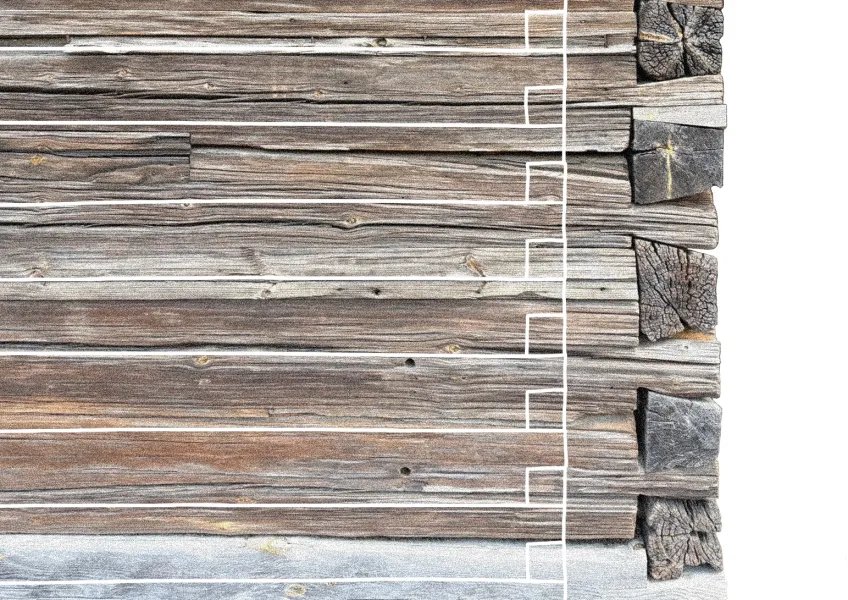
Teodor Ann-Christinsson / Timringens grepp: timring som verktyg för samtida arkitektonisk gestaltning
This thesis explores the role that the historically significant craft of log construction could play in today’s, in my view, increasingly rationalized and monotonous building sector.
The thesis is based on my interest in craftsmanship, culture, materiality, craft traditions, and heritage which are values that are also aligned with the art of log construction. Through an intuitive process, in which I worked simultaneously with models and sketches both analogically and digitally, a number of different structures gradually took shape.
The structures have a process in common, where log construction was used as an exploratory tool which served as a driving force in their creation. The project is divided into two parts: a timbering exercise in which I explored both the craft itself and my relationship to it, and a second part in which timbering as a method guided the formation of structures. In addition to the four timbered objects produced during the timbering exercise, the second part of the project resulted in the following structures: Maja, Moj, Bänk, and Bod, which all function as temporary forms within an urban context. The conclusions drawn concern the strengths of log construction: its conceptual strength, its adaptable qualities, and its scalability.
The presentation will be held in Swedish.

Lovisa Markus / Waiting for the Permanent
Temporary Architecture and Social Activation in Norrahammars bruk
This degree project investigates how small-scale architectural additions can function as social catalysts in the transformation of Norrahammars bruk. The project explores how exterior spaces within the former industrial area can be activated through temporary and flexible interventions that strengthen the site’s identity and create new social meeting places.
The work takes its starting point in Norrahammar’s history as an industrial community and in the ongoing transformation of the area from a closed industrial site into a more open and public environment. Through dialogues with the municipality, local actors and existing businesses, as well as studies of the site’s cultural heritage and historical layers, an overall strategy for the area is developed. The strategy focuses on a new pedestrian route through the former industrial site, divided into three sections with different spatial characters: an urban northern section, a dense and activity-oriented central section, and a green and recreational southern section.
The project then zooms in on the northern section and develops a pilot project in the form of a flexible and demountable pavilion. The pavilion functions both as an everyday social meeting place and as a stage for events, while also being adaptable and movable over time as the area continues to develop. The design is based on modularity, craft-based construction methods and materials connected to the site’s industrial history, such as timber, concrete and cast aluminium details.
Through strategically placed additions consisting of greenery, educational elements and social gathering spaces, the project demonstrates how small-scale interventions can contribute to making an area in transition more accessible, vibrant and identity-forming.
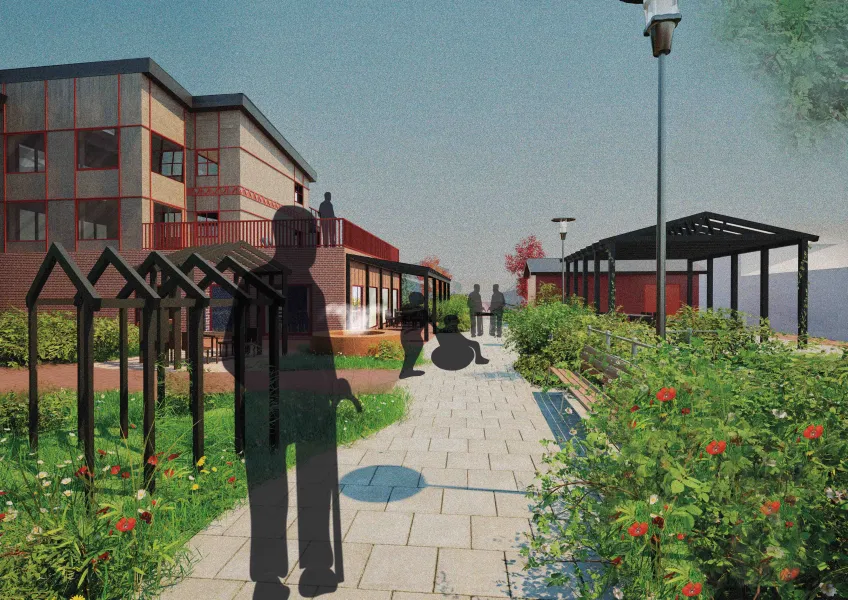
Troska Omer / Living life a bit more – housing for the elderly
With an increasing elderly population in Sweden, it becomes inevitable for architects to design homes and environments that prioritize the health and wellbeing of the elderly. Moving to a typical nursing home is not always an option nor desired by everyone, yet living at home can be problematic as well.
There are, however, several housing options available on the market for the elderly, such as independent living communities (known as ”trygghetsboenden” in Swedish). These give the elderly greater freedom to move in if desired.
A proposal for an independent living community is developed to explore how architecture can allow the elderly to continue to live their lives. By keeping the elderly engaged in their surrounding environment, a new home can be created where social interaction and activities become part of their daily experience. This is crucial not only to make it attractive for the elderly to live collectively, but also in order to combat a more sedentary lifestyle.
A range of different strategies are utilized in the design proposal. These include both a more holistic perspective, where the building form and its relation to surrounding context and identity become relevant, as well as the more finer details that motivate the elderly to continue living. In addition, the strategies aim to create inclusive spaces that create incentives for movement both in the inside and outside spaces. The project makes it clear that architects must seek beyond accessibility requirements when designing for the elderly generation.
The presentation will be held in Swedish.
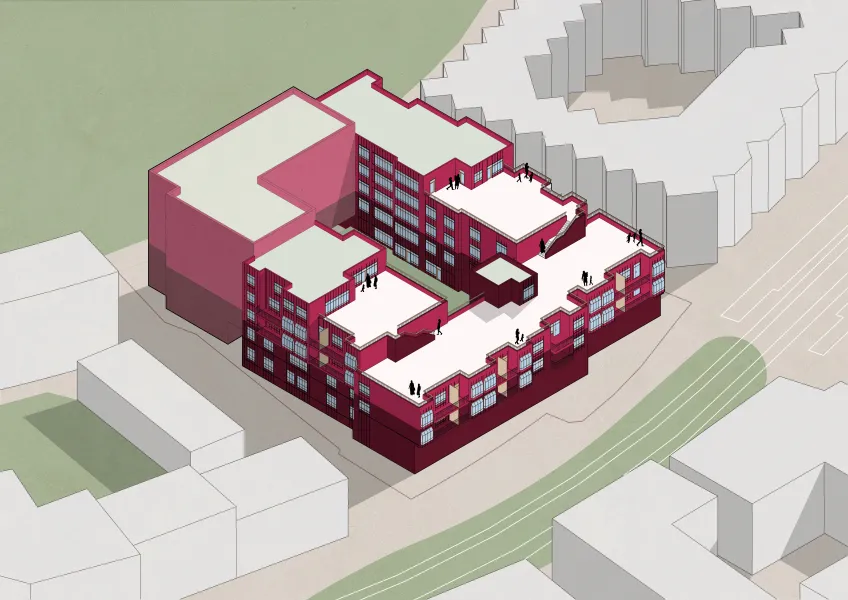
Clara Törnsjö / A women’s shelter
This master’s thesis explores the design of sheltered housing for woman fleeing domestic violence. Given the diversity of the target group, the complex is required to combine physical security with support for the individual's "inner protection." The goal is to create an environment that protects against external threats and strengthens the ability to break free from a destructive relationship.
As a basis for the project, I have interviewed a social worker and an architect with experience with the typology. I have also looked in too user experiences from media and social media. A central problem is that these environments are often perceived as prison-like, which creates a sense of confinement and uncertainty regarding the future. In 2025, a new Social Services Act was introduced, imposing stricter quality requirements for sheltered housing.
The research question is: How can architecture contribute to the development of inner protection?
My thesis is that the development of inner protection occurs more effectively in environments where residents feel at ease and that offer a holistic approach to both the present and the future. A breakdown in the process can occur for many reasons, but one of the most central causes is the difficulty of imagining a life on one's own terms. Therefore, I want the housing to embody what such a life could look like, while providing close access to professional support. A holistic perspective is essential throughout, as the housing must meet the needs of both residents and staff.
The project is designed as a multi-family building with internal functions that support recovery. I place particular attention on flows and on creating spaces that feel welcoming and instil a sense of dignity, while the building complex simultaneously maintains a high level of security.

Emil Olsson / Om det är fult så är det – Naturlig förändring som arkitektonisk resurs i ödehus
Contemporary approaches to abandoned houses typically fall between romanticizing decay or complete restoration. This project proposes a third position, that decay itself offers architectural values.
Through field studies of abandoned houses in the Scanian countryside, recurring patterns of deterioration, such as water intrusion, vegetation, collapse, and animal occupation, are documented.
They are explored not simply as signs of neglect, but as spatial, material, and ecological conditions that naturally transform the buildings over time. Rather than restoring the buildings to a lost “ideal” state, the project investigates through design strategies how human habitation can coexist with ongoing natural processes.
The work positions itself between the two dominant approaches to abandoned houses, on one side is ruin romanticism and urban exploration culture, where value is found in abandonment itself but without long-term use, and on the other is conventional restoration, where houses become useful only by removing decay. This project argues that they do not need to be exclusive, that decay can continue being present beside functional dwellings. Central to that idea are layered climatic zones that mediate between domestic space and ongoing ecological processes, negotiating comfort, safety, ecology, and natural change.
The project also questions broader ideas of control, permanence and anthropocentrism in architecture, shifting towards an understanding of buildings as environments in continuous natural change, something that should be worked together with, rather than against.
The presentation will be held in Swedish.

Sofie Gruvesäter / Tång
Can seaweed be a sustainable and functional addition to our modern material palette? Tång investigates the material, its properties, and its potential to find a place in modern building practices. The project is divided into two parts: prototype creation as an experimental study of the material, followed by the design phase, which takes a deep dive into structure, assembly and construction details. The sea, sand and coastal plants are allowed to inspire and guide the design and function of a seaside sculptural sauna, which serves as an example of how these principles could be translated into a contemporary building.
Several thousand tonnes of seaweed are removed from beaches on the Swedish west coast each year. Zostera marina, eelgrass, in Swedish ålgräs or bandtång, is a common species that shows up on beaches in plentiful amounts, especially in windy conditions. In some coastal regions this seaweed has historically been used as a supplementary insulation layer during harsh winter months, but most commonly as a fertilizer in agriculture. On the Danish island of Læsø, there is a long-standing tradition of using thickly spun chunks of eelgrass as a roofing material, a practice that to some extent continues today.

Axel Nyby / Reinforcing the vernacular
The devastating earthquake that struck the High Atlas Mountains of Morocco in September 2023 exposed the vulnerability of traditional architecture in the region and today some remote villages still rely on temporary shelters. This master's thesis proposes a reconstruction strategy for the affected mountain village of Izlloulen, exploring the balance between seismic resilience and vernacular building tradition.
Izlloulen is surrounded by a dramatic landscape of steep slopes at an altitude of nearly 1,800 meters. The Amazigh community maintains a self-sustaining lifestyle centered on agriculture and livestock. However, this remote existence faces the challenges of extreme climate, geographical isolation, and rural depopulation that were intensified by the magnitude 6.8 earthquake. Due to their heavy mass and a lack of structural connections tying walls and roofs together, the unreinforced dwellings could not withstand the seismic forces, causing many homes to collapse or suffer severe damage.
Today, the village faces the threat of standardized concrete reconstructions that risk erasing its cultural identity, thermal comfort, and harmony with the landscape.
Presents in Swedish.
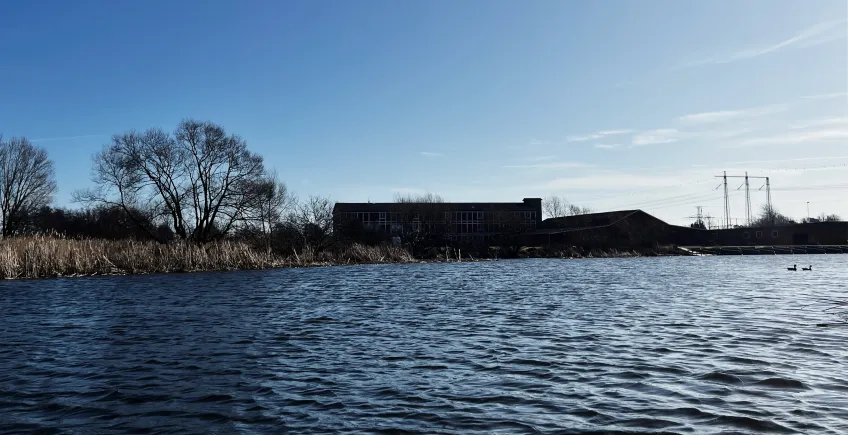
Greta Gram / Utåt Inåt
Set within the open agricultural landscape along a river, this project examines how architecture can operate through carefully balanced contrasts: between old and new, heaviness and lightness, rawness and refinement, enclosure and openness, as well as between the industrial structures and the softness of the surrounding landscape. The proposal seeks to reveal and intensify the existing buildings spatial qualities, structural rhythm, and tactile materiality.
How can former industrial environments in rural landscapes be transformed into new public spaces without losing their identity, material presence, or accumulated historical layers? Taking Borgeby Tegelbruk as its point of departure, this project explores adaptive reuse as a process of continuation rather than replacement, where traces of labour, time, and industrial production remain visible within a new architectural narrative.
Central to the project is the idea of movement as a spatial sequence inspired by the character of the river and its changing conditions. The long timber structure of the drying barn becomes an architectural promenade stretching from north to south, where spaces unfold gradually as a series of atmospheres with distinct spatial identities. Like the movement of water through the landscape, the sequence shifts between compression and openness, darkness and light, intimacy and monumentality.
By introducing new public programs such as a Naturum and a restaurant within the existing timber structure, the project explores how contemporary interventions can coexist with industrial heritage. New additions are conceived as inserted layers within the existing framework, allowing the original timber construction and large-scale volumes to remain legible and dominant. With the aim to transform the site into a socially and culturally active environment where industrial heritage, landscape, and public life can intersect in new ways over time.
The presentation will be held in Swedish.

August Mårtensson / Bra att ha [Come in handy]
Just as that piece of wood you kept in your garage, because it might “come in handy”, we ought to save and treasure our existing building stock with the same optimism for the future.
Bra att ha [Come in handy] is a gradual transformation project of Kaolinlagret, a warehouse for kaolin clay, in the old harbour of Gävle. The warehouse is among the normally overlooked and seemingly ordinary buildings of our cities that still have material, functional and social values that ought to be cherished.
The project proposes a mixed use development, where a reuse hub is combined with a cultural venue and a youth center. Reuse and a circular approach, to the transformation, maintenance and development of the building, unites the diverse program within its walls. Together they form a robust environment that can lead the way in the coming development of the area as a whole.
Come in handy aims to shift the current view of existing buildings, demolition and reuse and highlights the need for a change in how similar buildings are valued currently. If these buildings are restored, transformed or disassembled and reused, may be decided on a case to case basis. That they become rubble and waste, needs to be the last resort. It is not only about the preservation of heritage and history, but also about taking responsibility for the things we produce and the resources we deplete. Too long has the allure of the new, meant that we frivolously demolish the existing.
Presentation will be held in Swedish.

Olle Herolf / Mellan Bostad och bod. En framtida boendetypologi för ett levande skärgårdsliv
The growing demand and tourism in the Stockholm archipelago have created a conflict of identity, where property development is primarily driven by commercial hospitality industries and private seasonal housing. Today, the archipelago environment balances precariously between strictly protected natural areas and exclusive, privatized shorelines, leaving little room for a vibrant, year-round community. For the archipelago to remain a functioning social structure and not merely a seasonal tourist destination architectural answers are required on how new structures can be authentically integrated into the sensitive cultural landscape, serving as a legible, contemporary addition to the archipelago’s character.
This master's thesis investigates the role of permanent housing in the archipelago and explores the possibilities of designing contemporary residential forms in a context-bound dialogue with Sandhamn. Drawing upon Region Stockholm’s visions for the archipelago's designated "core islands" (kärnöar), a concrete design proposal is presented. The project demonstrates how architecture in a shoreline location can act as a catalyst for social sustainability by intertwining the needs of permanent residents, visitors, and the public.
The work is based on a methodical analysis of where new development is most appropriate, using parameters such as accessibility, infrastructure, and the preservation of local character. By investigating Sandhamn's existing built environment and historical patterns of life, the design is deeply rooted in the DNA of the site. The result is a new housing typology that offers a spatial and generous alternative within the tension field between the public nature reserve and the closed, private property.
The presentation will be held in Swedish.
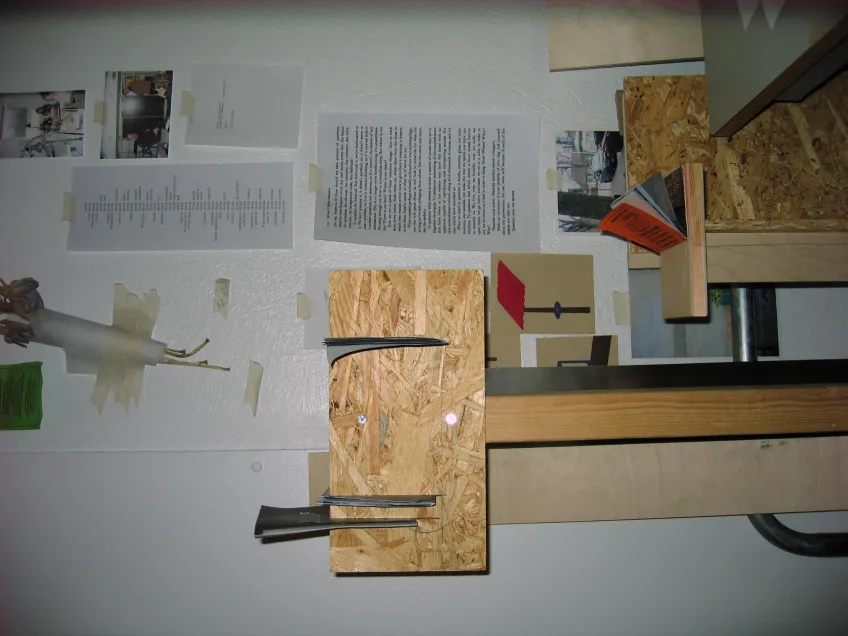
Lisa Wibäck / Stadens spår – och en serie försök att synliggöra dem
The city can be understood as a series of processes: it is ever-changing and its spaces are under constant (re-)negotiation. It is defined by meetings, gestures and exchange. Between people and surfaces. It consists of tens of thousands of parallel, sequential, simultaneous events that overlap and move through shared time and space.
This thesis is rooted in a fascination for the everyday: “the banal, the quotidian, the obvious, the common, the ordinary, the infra-ordinary, the background noise, the habitual” as Perec would say. It is formulated as a series of attempts to make visible the already-there and should be read as a continuous process and an open-ended dialogue with the city, its surfaces and inhabitants. It investigates how we inhabit public spaces and objects, and with which methods this appropriation can be made visible.
Through a series of walks, the city is documented in photographs, sounds and written tableaux – all collected within a living archive. A portrait of a city and the life that exists within it but is often overlooked. A few of the observations are translated to built interventions in scale 1:1 and reintroduced to the urban fabric to articulate and support the actual, informal, use of its surfaces and objects. Together, they trace a parallel narrative of the city that tends to pass us by in our day-to-day lives.
The presentation will be held in Swedish.

Amanda Austin / Barnens utekök
This thesis explores participatory design with children through the creation of an outdoor kitchen in Malmö. It asks what can emerge when children are invited to shape their environments.

Alva Villebeck / Att bygga för förändring - en studie av flexibilitet i det publika rummet
What role does flexibility play in the shaping of public space? How do we create spaces that encourage spontaneous social encounters? And how do we design for the unpredictable nature of public life?
This project investigates the concept of flexibility in relation to public space, by questioning the established conventions that govern the architectural practice today.
Archive of Previous Degree Projects
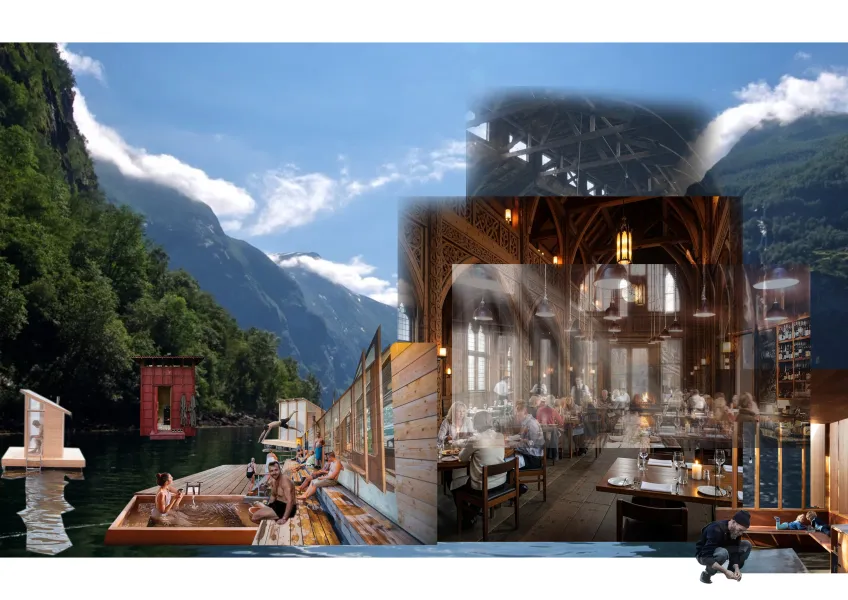
Johan Björck / A social cookbook / Building Social Capital Through Sauna Architecture
This master’s thesis explores how architectural design can foster social connection, community, and social capital through the creation of a public sauna in Geiranger. Grounded in social theory and architectural research, the thesis responds to growing concerns about social isolation and declining public interaction, emphasizing the importance of physical public spaces for mental, physical, and societal well-being.
Historically, public places such as agoras, forums, and coffeehouses have played a central role in civic life, though their social power has at times been viewed as a threat by authorities. In contemporary democratic societies, physical public spaces are once again valued as essential sites for dialogue, trust-building, and community resilience, particularly in contrast to increasingly suspicious views of digital platforms. This renewed interest coincides with a resurgence of sauna culture in the Nordic context, repositioning the sauna as an important social gathering space.
The thesis applies theories of social capital, public space, and the concept of the “third place,” drawing on scholars such as William H. Whyte, Jan Gehl, Ray Oldenburg, Jane Jacobs, and Robert D. Putnam. Key concepts include accessibility, trust, reciprocity, informal social control, and the distinction between bonding- and bridging social capital. Rather than focusing on urban scale, the study applies these theories to a single building typology, a public sauna.
Through site studies, interviews, theoretical research, and applied design experiments, the project investigates how architectural elements such as seating, light, water, sound, and spatial organization can encourage lingering, conversation, and interaction between strangers. Geiranger, Norway, serves as the case study, offering a unique context shaped by tourism, seasonal workers, strong local social capital, and natural surroundings.
The thesis ultimately aims to function as a practical “cookbook” or “toolbox” for those interested in making public places more socially engaging and inclusive. Defining architectural qualities and tools that support inclusive, attractive, and socially sustainable environments. By translating social theory into concrete design strategies, it seeks to clarify if a sauna can successfully foster community or not.
Presentation in Swedish.
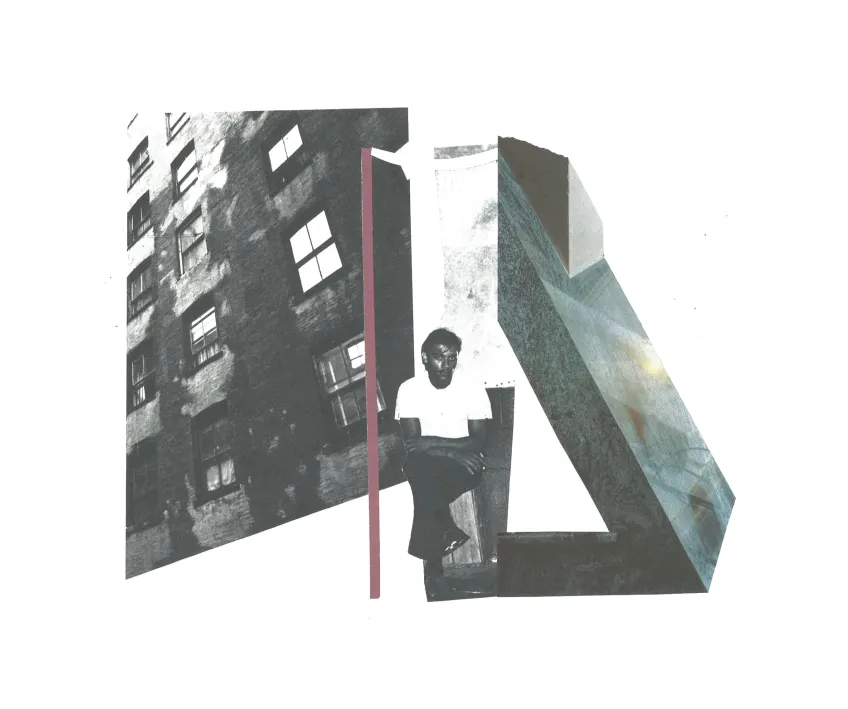
Andreas Färegård / Ambivalenta strukturer
Where does architecture begin and end?This thesis explores where, when, and how the threshold between furniture and architecture takes shape.
By working with architectural ideas through the format of furniture, the project examines architecture’s most fundamental components at a more intimate and body-scaled level than is typically addressed within architectural education. The investigation raises questions about how furniture can operate as an architectural tool—capable of transforming, reinforcing, or adding complexity to existing spatial conditions. What insights can be gained from more intimate spatialities, and what values might they hold?
The investigation is carried out through models, collages, and sketches, in dialogue with analysis and reflection. The outcome takes the form of a series of structures and objects that move back and forth within the borderland between architecture and furniture, where categories sometimes dissolve and at other times become more clearly defined.
The presentation will be held in Swedish.
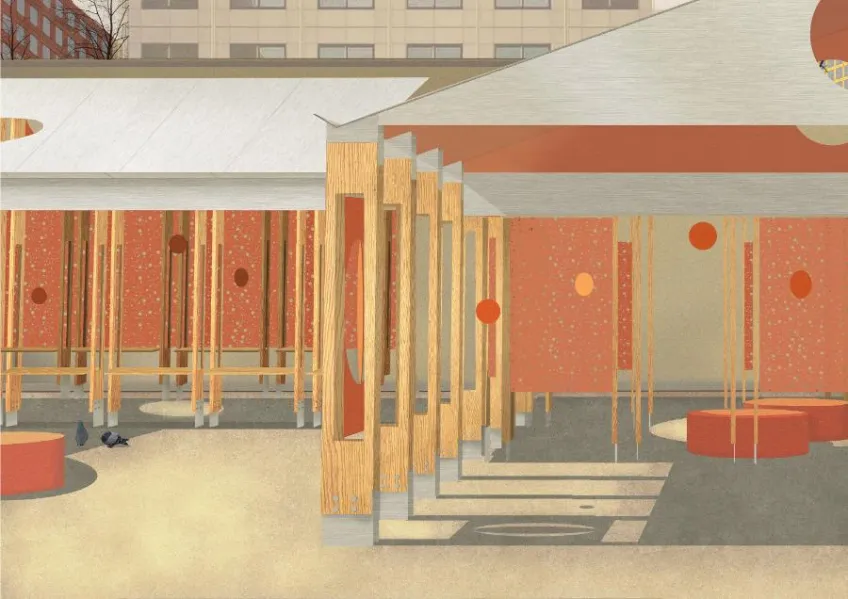
Alma Karlsson / Designing for contemplation in New York / The Perches
- exploring the concept of urban oasis within an exceptionally urbanized setting
In this project, I aim to explore the concept of urban oasis, or contemplative space within an exceptionally urbanized setting.
The rather diffuse term "contemplative space" refers to architectural or natural typology with specific spatial qualities that provide retreat and stillness, offering a counterbalance to the hustle and bustle of modern urban life. In cities like New York, where green space is scarce and densification is increasing, such spaces are becoming increasingly rare, especially when free from commercial agendas. which is where the case study is carried out. Given these circumstances, extra emphasis will be put on exploring nature's built-in calming effects and how, in a design process, one can work with the same qualities as it naturally possesses - copy nature's mode of operation, when green design is not an option or cannot be supported sufficiently.
The goal is to present findings from existing architectural and landscaping research, incorporating insights from environmental sciences, such as neuroscience, phenomenology, and environmental psychology. Through three case studies, each with unique challenges and opportunities, I aim to explore how the knowledge we have at our disposal, when applied to a physical place, can bring about a conveniently employed architectural system which can be implemented where needed.
How can we use the traits of contemplative natural elements in artificial/built environments? What might an easily employed spatial response to a heavily stimulative environment look like?
The presentation will be in Swedish.
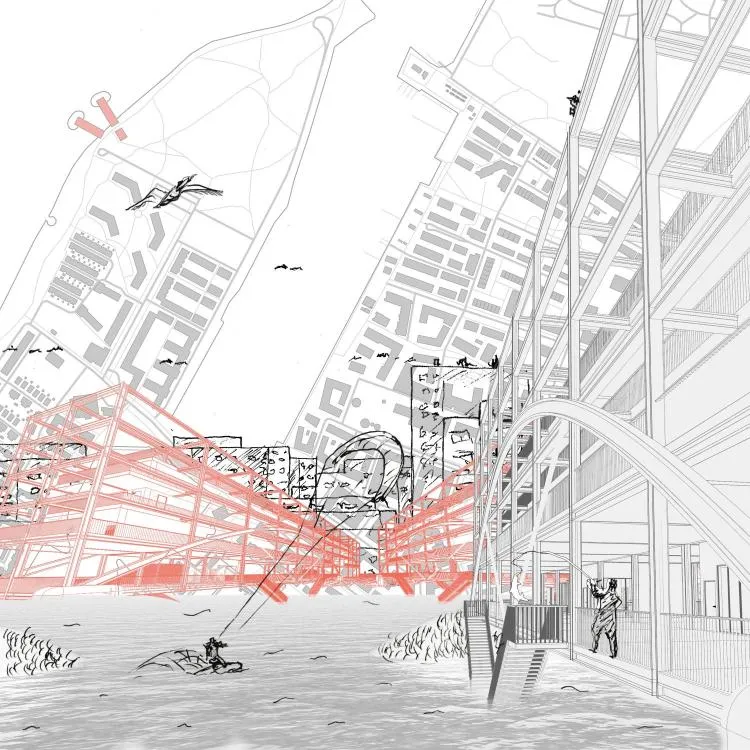
Navid Mirzaie / Där staden möter havet
How can urban development take place as close to the sea as possible, while also creating a sense of place and urban intensity?
A recurring aspect of many urban situations by the sea - “urban” meaning a designed and built-up environment - is that access to the blue spaces is often limited or compromised in some way. There are good examples of cities with proximity to water where the challenges are different from those along the Scanian coast. Some are protected by an archipelago, others by lagoons, some are not as exposed to wind and waves and most places further north in Scandinavia are lucky that the land uplift following the last Ice Age is still ongoing, keeping pace with the sea level rise caused by global warming. That is not the case in Scania and specifically not in Malmö.
The measures taken to protect the city from storm surges or other high-water events often result in some form of barrier. This barrier can take different forms: sometimes a levee, sometimes a greater distance to the water's edge and in other cases, sharp edges like a high quay. Can architecture bridge this division between city and sea and remove some of these barrier effects?
The purpose of this thesis in architecture is to explore how one such example of a meeting between the city and the sea can be designed. A design that makes the blue space more accessible without being vulnerable - to the extent it is reasonable - to the destructive forces of the sea, not only structurally but also in a way that does not feel unsafe or uncomfortable.
The presentation will be held in Swedish.
Omid Mirzaie / The Rings of Saturn – a journey through time and space
A transformation of a building with great cultural and historical value.
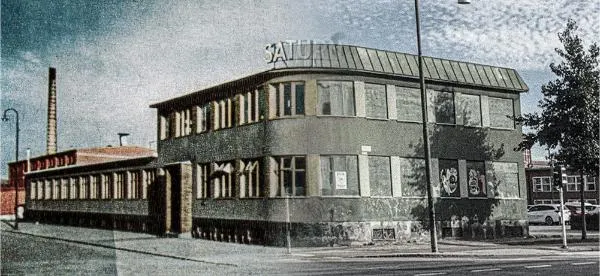
In a back room at the Fläkta Örn pharmacy at Stortorget in Malmö, laboratorian Anders Nilsson and pharmacist Fritz Borg are sitting and discussing the future. Nilsson has an idea he can't let go of; to start producing mulled wine, liqueurs, essences and other spirits here at home, instead of relying on imported products. The year is 1893 and the company Saturnus sees the light of day. Fast forward about 40 years and Saturnus, which has now grown as a company, begins planning the construction of a new factory in the functionalist spirit of the time. About 60 years later in 2000, Saturnus moved its operations to a modern factory, and Saturnushuset has since been empty and slowly decaying.
This thesis examines how architecture can help build bridges between different socialgroups and create a socially inclusive meeting place where everyone, regardless of background and affiliation, feels welcome. With a starting point in design and social sustainability, this project aims to transform the unused Saturnushuset in Malmö into a sustainable, multifunctional and creative meeting place. Saturnushuset is a culturally and historically valuable functionalist building, located in an area with high social and cultural complexity. By developing an architecturally elaborate and inclusive building and place, with a focus on music, art and culture, the ambition is that the new Saturnus will become a meeting place for young people and adults in the region. With Kulturmejeriet in Lund as the main reference, a similar business with similar conditions, this project aims to reach a large target group, both in terms of age, origin and activities. The ambition is that the project will combine social benefit with high architectural quality in a respectful transformation of a beautiful building, in the heart of Malmö’s cultural hub.
The presentation will be held in Swedish.

Amanda Perols / Mellan då och sen - för plats och material
Nyhamnen, once defined by industrial activities, ferry terminals and harbor functions, will in the future become Malmö’s new neighborhood with thousands of new housings, workplaces and city functions. Today the area stands empty, defined by large vacant spaces closed off by fences. The area awaits in silence, standing on the threshold between past and future.
In close proximity to the site, there are two materialbanks. The initial phase of this theses involved mapping the material available in these two banks. Measuring, documenting, writing, inspecting, sketching, testing and accepting.
In this project, reuse is more than sustainability, it becomes a method of design. The project uses what is already stored in the materialbanks and the design is guided by the principal form follows availability. Through new compositions of the reclaimed material, the project allows the city’s material memory to continue into it’s future and explores how this can activate a site in waiting. The project explores the question: how can meanwhile use of site and material strengthen one another?
By enabling new forms of appropriation, the site can gradually become part of the citizens habits and memories. As more people develop routines and a desire to dwell here, the emerging neighborhood gains a stronger start when completed. In this way, an urban void can be transformed into a place of collective memory.
The presentation will be held in Swedish.
Hanna Björklund / Aktivitetstomten Stök & Bök - en plats arv och identitet
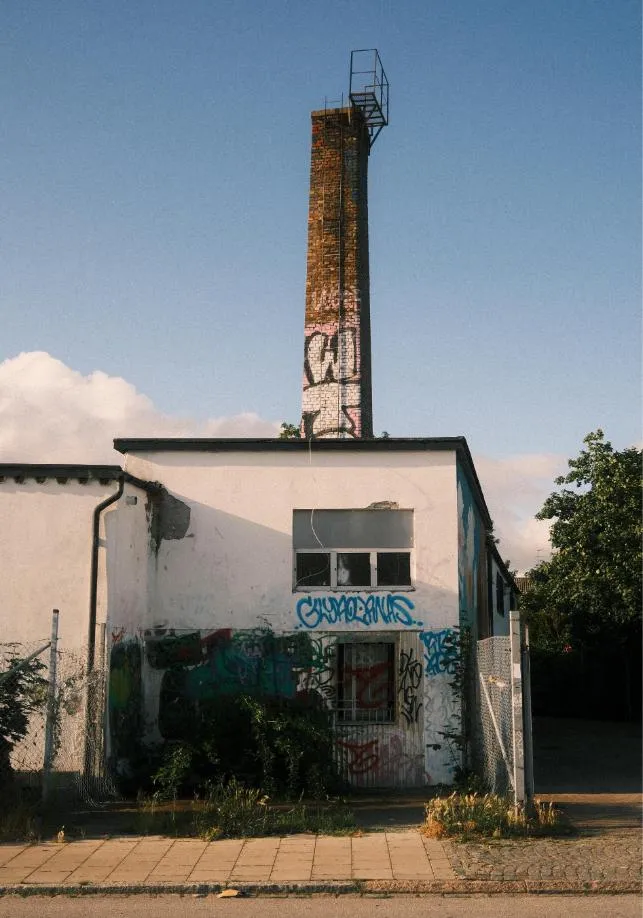
Södra Sofielund embodies a concentrated portrait of Malmö's complexity - an area characterized by both social challenges and strong local community, where cultural life, small businesses, and communal initiatives coexist alongside inequality and insecurity. This diversity is often viewed as a problem, but should rather be seen as a resource. At the same time, many of the area's existing qualities and informal structures risk being lost when the inner city's rules of high-density development take hold of the area.
This work examines how a place transforms over time and how these changes affect the people who live there - and how people, in turn, shape the place. We are molded by the contexts we find ourselves in, while simultaneously leaving our mark on what surrounds us. The work raises questions about who has the right to shape the city, which narratives are given priority, and which risk being silenced.
By examining the physical, social, and cultural elements that shape Södra Sofielund's identity, the work explores how architecture can support the transformation of a place without erasing its inherent qualities. Which values are important to preserve? Which resources promote positive development without displacing existing values?
These questions are made concrete in a design proposal for an old industrial site located in Sofielund's early working-class neighbourhoods. The proposal investigates how new architecture can strengthen the place's identity, preserve cultural-historical and social values, and simultaneously contribute to sustainable development for the area and the people who live there.
Presentation in Swedish.

My Hartman / Sockerbruksområdet i Arlöv
The establishment of the sugar factory in 1869 played a decisive role in the development of Arlöv and is therefore of great importance to the small town. With the production relocated, the thesis explores how the sugar factory area may continue to contribute to Arlöv’s development under new conditions.
This thesis investigates the transformation of a disused industrial site with cultural and historical value into a vibrant mixed-use area. The project employs a design approach, combining site analysis, design strategies and iterative work across multiple scales and phases. Central to the project is the integration of industrial heritage as a foundation for new urban spaces.
The design proposal includes new housing, local services, public spaces and streetscapes. New connections to and through the site create new movement patterns and reactivates an area that has been closed to the public for more than 150 years.
Through adaptive reuse and human-centred urban design, the project proposes a shift from spaces formerly shaped by industrial production and machine-based flows, to spaces designed for people, social interaction and everyday life.
The presentation will be held in Swedish.
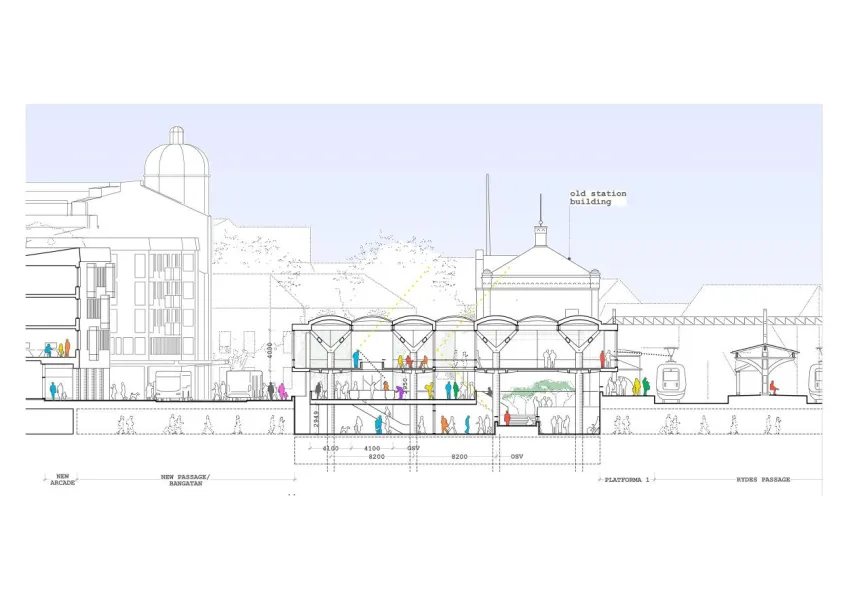
Olof Nilsson / Lund - The Railway and the Urban Fabric
The city is a place where different activities can exist side by side: the private next to the public, the sacred next to the everyday. Such coexistence depends on a rich variety of spaces. Fronts and backs, insides and outsides, large and small rooms form a spatial ecology of streets, passages, courtyards, and squares.
Olof Nilsson / Lund - The Railway and the Urban Fabric
The city is a place where different activities can exist side by side: the private next to the public, the sacred next to the everyday. Such coexistence depends on a rich variety of spaces. Fronts and backs, insides and outsides, large and small rooms form a spatial ecology of streets, passages, courtyards, and squares.
Lund Central Station is one of southern Sweden's most intense mobility nodes. It is a site where historic urban structure meets contemporary infrastructure. Today, the railway forms a strong boundary through the city, resulting in fragmented movement and large, undefined spaces for passing through.
The proposal treats this boundary as a spatial opportunity. The station area is approached as an extension of the city rather than a single object. Through a sequence of connected spaces and layered structures, the project reconnects the urban fabric across the tracks and establishes a continuous spatial framework for everyday urban life.
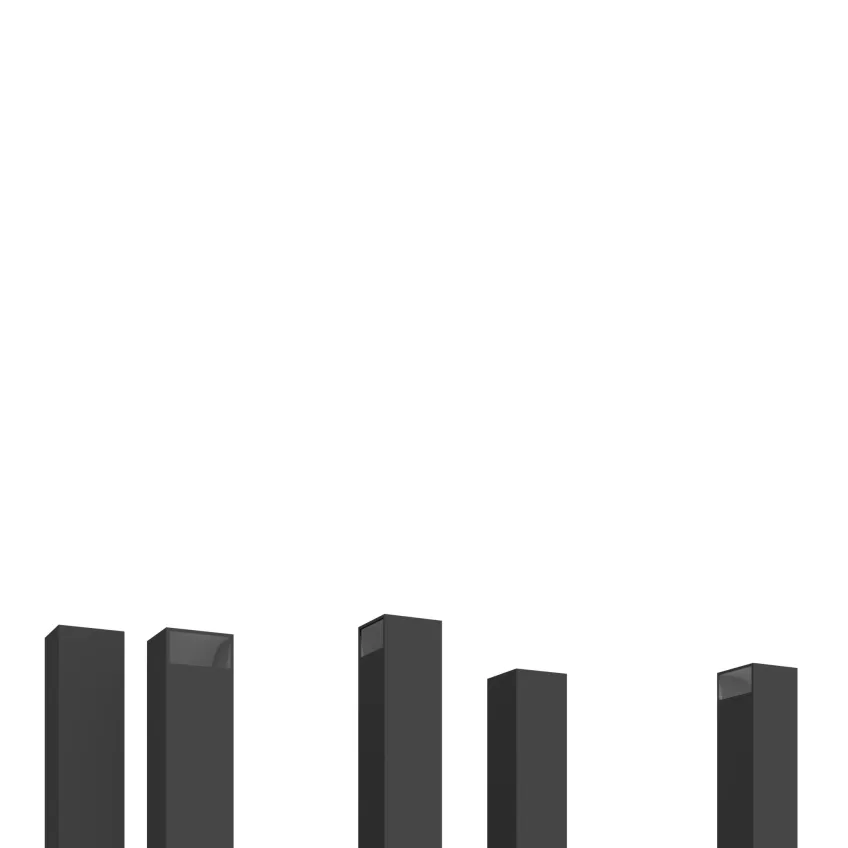
Felix Olofsson / From Storing to Gathering
Frihamnen in Stockholm is currently undergoing a major transformation. An area that for a long time has served as a central hub for port and industrial activities is now planned to become a new urban district with housing, offices and public services. In this process, several existing industrial buildings face demolition in order to make room for new development. As a result, important layers of the site’s history, identity and architectural character risk being erased.
This thesis investigates how Frihamnen can be developed through the reuse of existing industrial buildings rather than through large-scale demolition. The project is based on the premise that many of these structures are poorly suited for conversion into housing or office space, yet possess qualities that can contribute in other ways to urban development. Through their scale, robust construction and distinct industrial expression, these buildings hold the potential to accommodate public functions and to act as social and cultural resources for the city.
The work focuses in particular on Magasin 4, a warehouse building in Frihamnen that is currently used by Swedish Television for storage, but which is at risk of demolition as part of the area’s redevelopment. Historically, the building has been closely connected to storage and logistics related to the adjacent silo structures. This thesis explores how Magasin 4 could be transformed into a public building with cultural functions, and how such a transformation could contribute to activating Frihamnen both during and after the ongoing urban redevelopment process.
Through site analysis, historical research, reference studies and design explorations, the project develops an architectural proposal that examines how culture can be given a more permanent and integrated role in the transformation of Frihamnen. The ambition is to demonstrate how the reuse of industrial buildings can support an urban development approach that goes beyond new construction, instead engaging with existing structures and allowing the site’s industrial history to remain present within the future city.
The presentation will be held in Swedish.
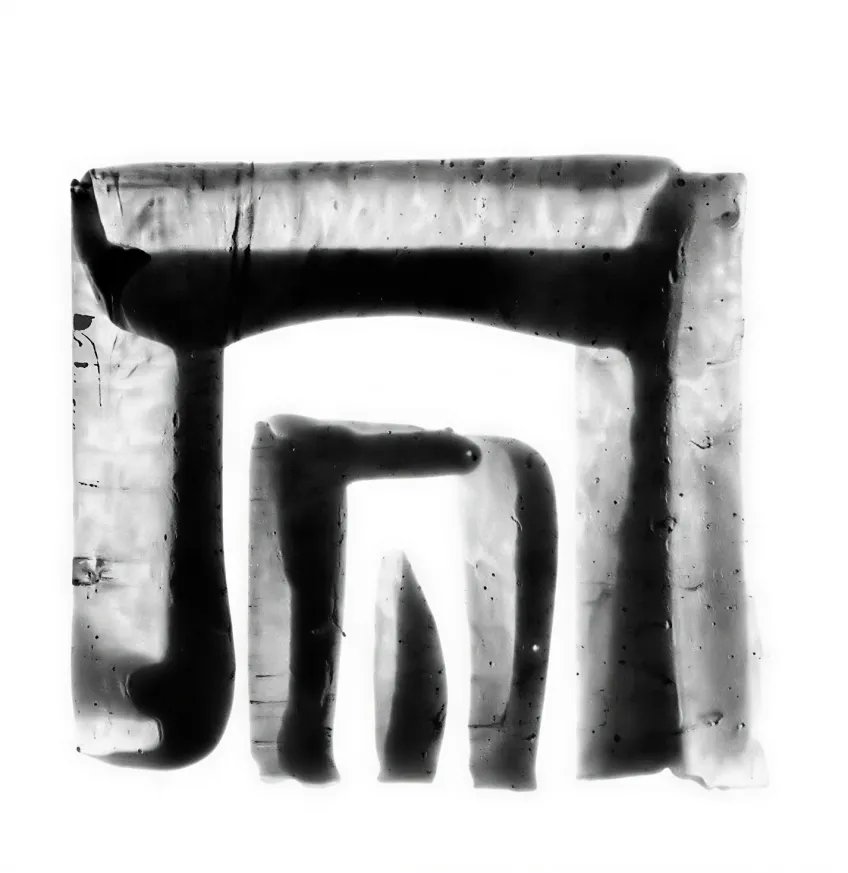
Greta Ståhlbom / Written Layers: Hasslemölla Gård
The mill at Hasslemölla is first mentioned in 1546, and today the site consists of a farmstead with buildings dating from the mid-19th century. Historically used as a mill, dwelling, stables, storage and carriage shed, the buildings are now proposed to be transformed into a new centre for the Storkriket Biosphere Reserve. This thesis explores a phased transformation of the site, with proposed interventions as an initial step in reactivating the farm while allowing for future change.
The project approaches Hasslemölla as a palimpsest: a place where traces of previous uses, atmospheres and material conditions remain visible beneath new interventions. Rather than erasing the existing layers, architectural interventions are introduced to highlight, reinforce or reinterpret them. Time is treated as an active design parameter, acknowledging that future decisions may lead to the preservation of some elements while others are allowed to decay or disappear. Architectural interventions therefore aim to do one of two things: either strengthen the meaning and continued care of specific elements, or grant them significance in the process of their passing.
This approach results in a series of small-scale interventions that form new architectural layers; written over, alongside or in place of the existing ones. The interventions differ between preservation, contemporary use and architectural addition. The project is structured in phases, illustrating how present-day actions can support a long-term transformation and allow the site to adapt organically to its new role, and how a story of a place can have multiple endings.
Presentation in Swedish.
Adelie Centerstam / Mellan gatan och lägenheten
In 2024 over half of Sweden’s population lived in an apartment. Living in an apartment means that you live close to your neighbors and share an entrance space through which you pass to get to your apartment. I call this the entrance room and the staircase room. In this thesis I have researched these rooms, their architecture and their potential for positive social interaction.
The architecture that we see and experience every day affects how we interact with the world and in turn how we feel. During the pandemic it became increasingly clear that real world social interaction is important for our mental wellbeing. I believe that the design of the entrance and staircase room in an apartment building affects the potential of small meetings between people and therefore also their potential for increased happiness in their everyday lives.
I have read literature and gathered information regarding the functional, spatial and social qualities of the entrance and staircase room. Through that lens I look at existing Swedish and European apartment buildings and analyze the form and space of the entrance, entrance room, staircase, and the relationship between the rooms, the building and the street. After looking at an excerpt of objects with varying design I have created typologies which describe the different variants of entrance situations and staircase rooms that I have found.
For big companies looking to maximize profit, the staircase and entrance room in apartment buildings are often built as small as possible. I aim to shine a light on the value of this space and that with small measures, one can improve the design and in turn the experience of the room as well as the experience of living in and visiting the building. Maybe that would result in the same amount of profit as the alternative?
The presentation will be held in Swedish.
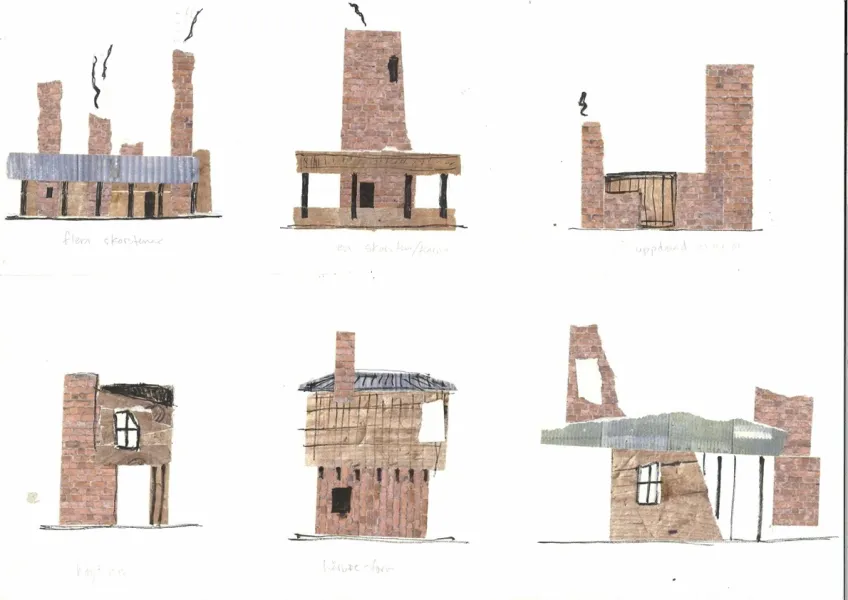
Linnea Johansson / Hus för Hand
Starting with the hand, this thesis investigates architecture at the intersection of craft, self-building and industrial production, with a focus on human presence in relation to sustainability.

Jon Liander Ankarcrona / Current Architecture & Our Human Experience Within It
As society changes, architecture inevitably does as well. We’re now entering a future with unprecedented conditions mixed with our older societal tendencies. Digitalization is one name and one perspective we call this change that is specifically altering the way we form our conception of our world; dynamics for how ideas proliferate and spread amongst ourselves now depends on a digital process totally unbound by physical space. This, and other topics regarding: politics, economics, technology and culture, is in this work related to architecture and the creation of our built environment.
Architecture is approached as a human practice of making, in which drawing, building and experiencing share the same tactile process. The project critiques the pursuit of aesthetic perfection and uniformity, emphasizing how irregularity, joints, and imperfections contribute to tactile richness, adaptability, and visual interest.
Through a design-based investigation, it explores how construction can accommodate variation in form, color, and detail to make room for reused materials. Beginning with hands-on workshop explorations, the project focuses on dwellings and prototypes through models, collages and abstract studies. By comparing handcrafted and industrial approaches, the thesis proposes strategies for adaptable, human-scaled architecture that values material awareness, expressiveness and reuse.
The presentation will be in Swedish.
This series of essays is a tour through what architecture is and what we perceive it to be! What we think is its limits and what influences its manifestation. By identifying the relational-structures in current society and the complex dynamics that holds control over the creation of the built environment. This work critically reflects upon the contradictions that appear when looking under the hood of our profession, questioning the truths we apply to current architecture, investigating their merits and origins.
This work is seeking to communicate, and when focusing on this rejects the formalistic style, embracing a free voice which equals a different type of intellectual transparency, honesty! Embracing the fact that the author is a person, first and foremost, pertains to the cohesive thread that ties these eclectic essays together: that what everything we do, is for the human experience!
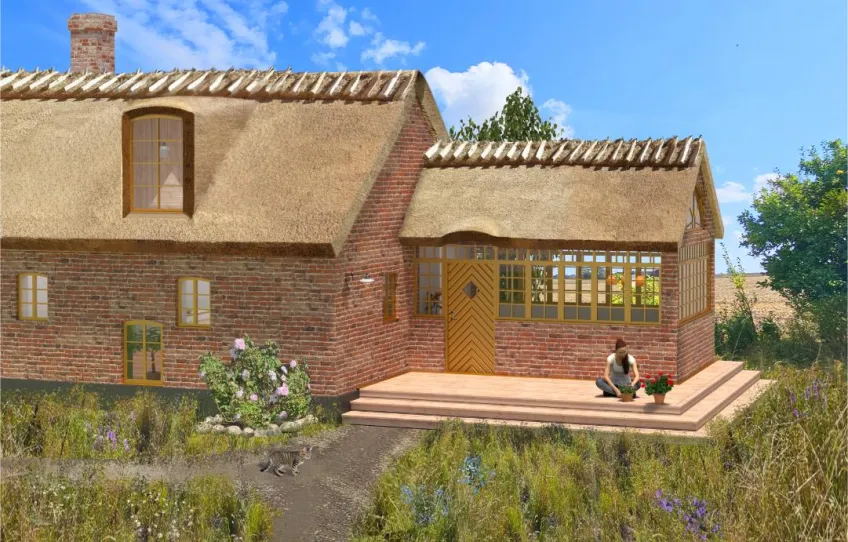
Louise Leijon / Transformationsstrategier för skånska avstyckade gårdar
During the 20th century, agriculture in Scania needed to be streamlined and rationalized, and larger farms did therefore buy up the land of smaller farms to a large extent. The smaller farms now function as single-family homes without the possibility of farming or animal husbandry. This means that the outbuildings on these farms have lost their original purpose and are often empty and falling into disrepair or are used for storage.
Since the farm's operations were discontinued and given the same purpose as a villa, that is, to house a family whose source of income and food procurement was outside the home, social life changed. Fewer people were tied to the farm and the feeling of community that was gained through joint work disappeared.
When small fields of cultivation and pasture disappear in favor of large monoculture farms, biodiversity is also disadvantaged. This has led to the subdivided farms becoming islands of varying flora and fauna amidst large seas of cereal crops.
At the same time, we need a living countryside. By transforming these buildings into new businesses and homes, the farms can come alive again. But it is important that it is done in a sustainable way.
This thesis is an attempt to draw attention to this part of Scania’s building stock and consists of a transformation project where cultural heritage, building conservation, and biodiversity together are the basis for sustainable rural life. I also study the potential of these concepts and their mutual relationship in a transformation context. This results in a set of transformation strategies on how to map, prioritize, and find ways to transform a small Scanian subdivided farm.
The presentation will be in Swedish.
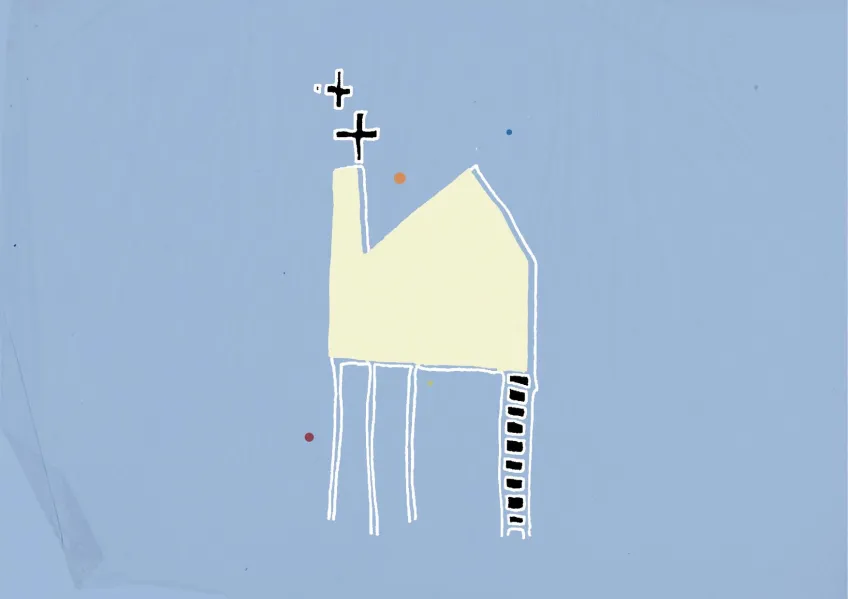
Saga Persson & Signe Rittfeldt / Where Are We Heading?
Have you ever disappeared into the world of a book, letting the story carry you on a journey? A place described in writing can become intensely real, as if you were there yourself. Despite the absence of images, drawings, or models, which are architecture’s more traditional media of representation. Here, text is allowed to stand on its own, shaping a reality in its own right.
This project explores that potential through the art of storytelling by writing a book. In On the Right Path, we depict our walk along the pilgrimage route Via di Francesco in Italy, taking the reader on a journey while attempting to approach architecture’s more immaterial qualities. The intangible, what cannot be touched or measured, what is remembered and misremembered, associations, encounters, and details.
The book functions both as a tool and as the result of a method. Through written narrative, we investigate how places can be articulated through lived and subjective experience. These aspects often remain peripheral yet influence us more than we tend to realize. We ask whether such qualities can be conveyed without drawing, measuring, photographing, or otherwise visually representing a place.
Every place holds as many experiences as there are people who encounter it. Written in a relatively relaxed, non-academic style and articulated through two authorial voices, the book gives space to the personal and situational rather than the measurable and monumental.
The book is complemented by the report Where Are We Heading?, in which the theory, method, and results are discussed through a phenomenographic and humanistic perspective on architecture. The project proposes writing as an alternative and complementary way for architects to understand, shape, and communicate a place. This is a method that does not seek objective truth, but instead acknowledges the complexity of architecture and its grounding in lived human experience.
The presentation will be held in Swedish.
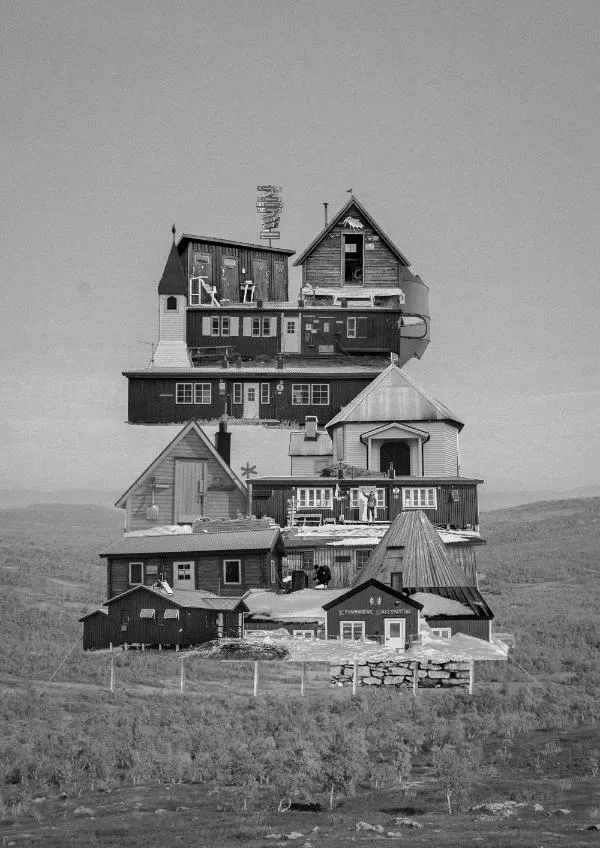
Mathilde von der Groeben & Sandra Erlandsson / Katalogen
- A system of tourism related built environment along hiking trails in the Swedish mountains
With a growing interest in hiking and nature-based tourism worldwide, the Swedish mountain regions have become increasingly popular destinations for both international visitors and domestic tourists. At the same time, these landscapes are important grazing grounds for reindeer, which has led the Swedish Tourist Association to scale back its operations in Jämtland by closing restaurants and reducing accommodation capacity. Yet, some form of infrastructure needs to exist, which leads us to multiple questions: How comfortable should a trip to the mountains be? How can design encourage visitors to act responsibly? And what might the future of tourism-related buildings in the Swedish mountains look like?
Through a catalogue of six small-scale objects and buildings, our project investigates a new general architectural system for the mountain environment. Ranging in scale from a simple bench to a mountain hut, our aim with these interventions is to function as incentives to explore the landscape in a more responsible way.
The presentation will be held in Swedish.